Making a pair of durable jeans isn’t actually that difficult. Use a heavy fabric, limit the stretch, reinforce the vulnerable areas and process the material as little as possible. There’s a good chance that a pair of jeans made this way will last a long time. But does that mean they’re good trousers? We put the question to Willem and Wouter Noterman.
Willem Noterman: “Not for us. A good pair of men’s trousers must be strong, but also comfortable. They must drape well, feel pleasant against the skin, retain their shape and suit the way men want to wear their clothes today.”
Wouter Noterman: “And there’s something else. I believe that to be able to talk about a good pair of trousers, you also need to know where they come from, who worked on them and whether everyone in that supply chain was fairly compensated for their contribution. Because for us, quality isn’t just about what you see on the outside. You also have to dare to turn a good pair of trousers inside out – both literally and figuratively.”
Jeans are, by their very nature, a strong fabric
What we commonly refer to as jeans is, strictly speaking, denim: a woven fabric traditionally made largely of cotton, with the characteristic twill weave contributing to its recognisable texture. Traditionally, the warp threads are dyed with indigo, whilst the weft remains lighter. As a result, denim is often lighter on the inside, and the characteristic fading that gives jeans so much character develops as they are worn.
It is no coincidence that denim has built up its reputation as a strong fabric. The material is ideally suited to clothing that is subject to heavy use. So, for anyone who wants to make trousers that are as strong as possible, there are various options. Choose a heavier fabric. Use less stretch. Wash and treat them less frequently. Use heavier stitching. Reinforce vulnerable areas. It all makes sense. But how many men want to walk around every day in trousers that are almost indestructible, yet feel stiff when they’re sitting at their desk, getting into the car, cycling or moving about? That’s where the real challenge begins for us.
Strength is just one aspect of quality
When discussing sustainable clothing, durability is often almost automatically equated with quality. The longer a pair of trousers lasts, the better. That sounds logical, but it’s too simplistic. From a technical point of view, too, the quality of textiles is determined by far more than just the strength of the fabric. Consider shape retention, wear resistance, colour fastness, seam strength and how a garment behaves after repeated wearing and washing. And that is precisely why, in our view, it is difficult to assess the quality of a pair of jeans in a matter of seconds in a shop.
That’s something we’ve experienced ourselves. You only really know what a pair of trousers is worth once they’ve been worn, moved in, washed and worn again. In our view, a good pair of jeans must therefore fulfil several criteria at once:
- be strong enough for intensive and long-term use;
- be comfortable enough to wear often and with pleasure;
- retain their fit as well as possible;
- look contemporary;
- be solidly constructed and finished;
- and be produced in a supply chain where we know as much as possible about who adds what value.
The challenge doesn’t lie in any one of these qualities on its own. The challenge lies in the combination.
Making fashionable jeans is harder than making indestructible ones
Fashion makes this balancing act even more complex. The way men wear their trousers is changing. Slim silhouettes are giving way to straighter or looser fits. Colours are changing. Washed effects are changing. The desired softness and suppleness are evolving. So a pair of jeans must not only perform well technically; they must also fit well. That’s why you can’t simply say: ‘Let’s take the heaviest fabric we can find and reinforce everything as much as possible.’
A pair of trousers must remain comfortable when someone is sitting down. They must offer sufficient give when someone moves. The knees mustn’t start to bulge out too quickly. The waist must retain its shape. At the same time, the fabric must remain strong enough in areas subject to high tension and friction.
For us, choosing materials is always a quest for balance. For the best combination.
That’s why our denim isn’t made exclusively from cotton
We usually work with denim from the Italian weaving mill Candiani. One of the fabrics we use consists of 92% cotton, 6% elastomultiester and 2% elastic fibre. According to information from our supplier, the cotton comes from Brazil and is sourced through the Better Cotton Initiative. This composition is no coincidence. The cotton gives denim its distinctive character. The elastic fibres are added to make the trousers more comfortable and to ensure that the fabric returns more effectively to its original shape after movement. Here, too, there is a compromise. If we used cotton alone, we could keep the fibre composition simpler. With more elastic fibres, we could more easily create even more stretch. But neither of these extremes automatically results in the best trousers.
The question is always: which fabric is best suited to the trousers we want to make.
Good fabric doesn’t necessarily make good trousers
Even with excellent denim fabric, you can still end up with a poor pair of trousers. Because from the moment the fabric enters the workshop, a second part of the story begins. How are the trousers cut? Where are the seams placed? How are those seams constructed? Which threads are used? How are the pockets attached? Where do the greatest stresses occur whilst wearing them? How are the trousers washed and finished?
These are often small decisions that you can barely see when a pair of trousers is neatly hanging on the shop rack, but they help determine how they’ll hold up after months and years of wear.
A concrete example is our back pocket. On the inside, we add an extra piece of lining there. In the past, the fabric would occasionally tear in that area. By adapting that construction, that problem hardly ever occurs today.
Is that spectacular? No. But for us, that is exactly what craftsmanship is all about. Observing what happens whilst the trousers are being worn. Identifying problems. And making the next pair of trousers better.
Feel free to turn our trousers inside out
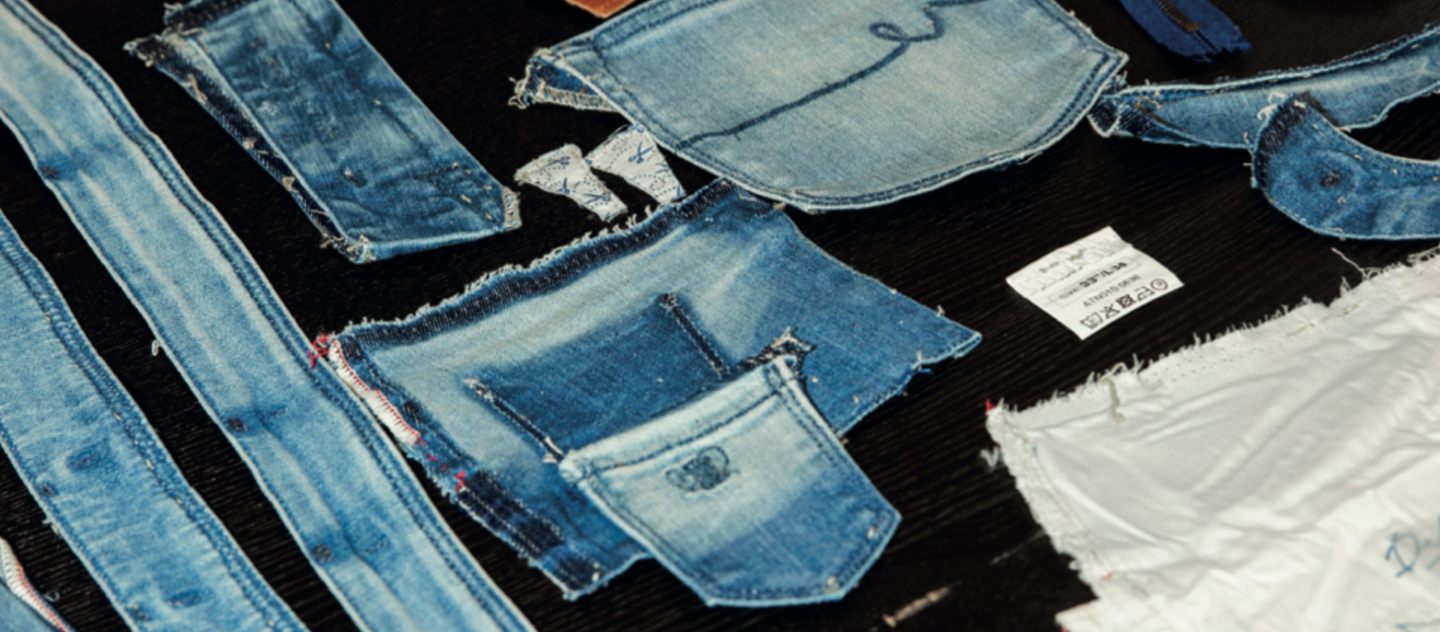
At Noterman, we make it clear that you’re welcome to turn our trousers inside out. Literally. Because on the inside, you can see a lot of what remains hidden on the outside. You can see how the seams are finished. How the pockets are attached. Where the reinforcements are. How carefully the different parts are joined together. Creating a neat exterior is one thing. But in our view, working with care in places you know the customer will almost never see says much more about the way a garment is made.
But we also mean ‘turning inside out’ in a figurative sense. We believe that, as a clothing brand, you must dare to show what lies behind a pair of trousers. Not just the end product.
Fairness is also reflected in the price of a pair of trousers
When people talk about sustainable fashion, the conversation often centres on cotton, water, CO₂, recycling and longevity. All of these are valid points. But for our family, sustainability has another dimension: fairness. A pair of trousers isn’t created by just one company or one person. There is someone who grows the cotton. Someone who spins the yarn. Someone who weaves the fabric. Someone who dyes and finishes it. There are people who develop patterns, cut the fabric, sew the trousers, produce buttons and zips, organise transport and, ultimately, sell the trousers. Every link in the chain adds something. We believe that anyone who adds value should be fairly remunerated for it.
That sounds obvious. In an industry where the retail price is sometimes the most important criterion, it is unfortunately not always the case. For us, therefore, fairness does not mean that every pair of trousers must be produced as cheaply as possible. It means that we try to understand where the value is created and where the money ends up.
That’s why we show what goes into our trousers
For us, transparency isn’t just a slogan that belongs at the bottom of a sustainability report. It needs to be put into practice. That’s why you’ll find information on our website about the various components that make up our trousers. Not just what each component is, but also who the supplier is, which country it comes from, and what the cost price is.
That doesn’t automatically make our trousers perfect or 100 per cent sustainable. We don’t claim that either. But it does make the conversation more honest. Because only when you know what a product is made of and how the various links in the chain contribute to the end result can you begin to judge its true value.
For us, turning a pair of trousers inside out therefore means two things: showing how they’re made, and showing who made them.
A pair of trousers costing €50 can also be durable
We don’t want to spin any fairy tales about that either. A pair of jeans costing €50 can, technically speaking, last for years. We recognise that ourselves. A higher price is therefore not automatic proof that a pair of trousers will last twice as long. But the question goes beyond simply: how many years will this fabric remain intact? Which fabric was chosen? How were the trousers constructed? How much time went into developing the fit? Where were they made? By whom? Under what conditions? Which components were used? How much does each party in that supply chain earn? And how much attention is paid to problems that only become apparent after months of wear? That is why we think it is too simplistic to express quality solely in terms of lifespan.
Sustainability also deserves a nuanced approach
The same applies to the word ‘sustainable’. A pair of trousers that lasts a very long time physically does not automatically have the smallest ecological footprint. A fabric containing synthetic stretch fibres may be more comfortable and retain its shape better, but at the same time it is more complex to recycle back into pure raw materials. Trousers made exclusively from cotton may be simpler in that respect, but that does not automatically mean they perform better in every other respect.
So there are trade-offs to be made. We do not claim to have fully resolved all these trade-offs. We do, however, try to make them visible. Because, for us, transparency isn’t just about telling you what we’re proud of. It also means acknowledging where choices have a downside.
Ultimately, you can only judge quality over time
There are, of course, signs that give an indication of the quality of a pair of trousers. Look at the seams. At the zip. At the buttons. At the reinforcements. Feel the fabric. Try turning the trousers inside out.
But no quick test tells the whole story. The most important quality test only really begins when someone wears the trousers. How do they fit after a full working day? How do they feel after twenty washes? Does the waist stay true? What happens to the knees? How does the colour change? Do the seams and pockets remain intact?
And perhaps even more importantly: after two or three years, do you still enjoy taking those trousers out of the wardrobe?
Because trousers can be technically very strong and yet hardly ever worn because they aren’t comfortable or are no longer considered attractive. That, too, is waste.
The best jeans are therefore not the strongest jeans
Perhaps that is the most important conclusion of all. We could make a pair of jeans that are stronger than the ones we make today. A heavier fabric. Less stretch. Less washing. Even more reinforcements. But if those jeans become less comfortable, don’t drape as well and, ultimately, are worn less often, have we really made a better pair of jeans?
We don’t think so. The true craftsmanship lies precisely in striking a balance. Between strength and softness. Between freedom of movement and shape retention. Between fashion and durability. Between ecological choices and technical performance.
And for our family, also between price and fairness. Anyone who makes a meaningful contribution to a pair of trousers should be able to be fairly compensated for it.
That’s why you’re welcome to turn our trousers inside out.